A constitutional monarchy
Australia is a constitutional monarchy. This means that the Head of State is the King of Australia, but his powers are limited by the Australian Constitution.
In practice, Australia is governed democratically. The King is represented in Australia by the Governor-General, who acts on the advice of the elected government.
A federal system
Australia has a federal system of government, where power is shared between the national government and the states.
The Constitution sets out which powers belong to the federal government and which powers belong to the states and territories.
The three levels of government
- Federal government: responsible for national matters such as defence, immigration and foreign affairs.
- State and territory governments: responsible for areas such as schools, hospitals and police.
- Local governments: responsible for local services like roads, rubbish collection and community facilities.
The separation of powers
Power in Australia is divided into three separate branches to prevent any one group from becoming too powerful.
Parliament (legislative power)
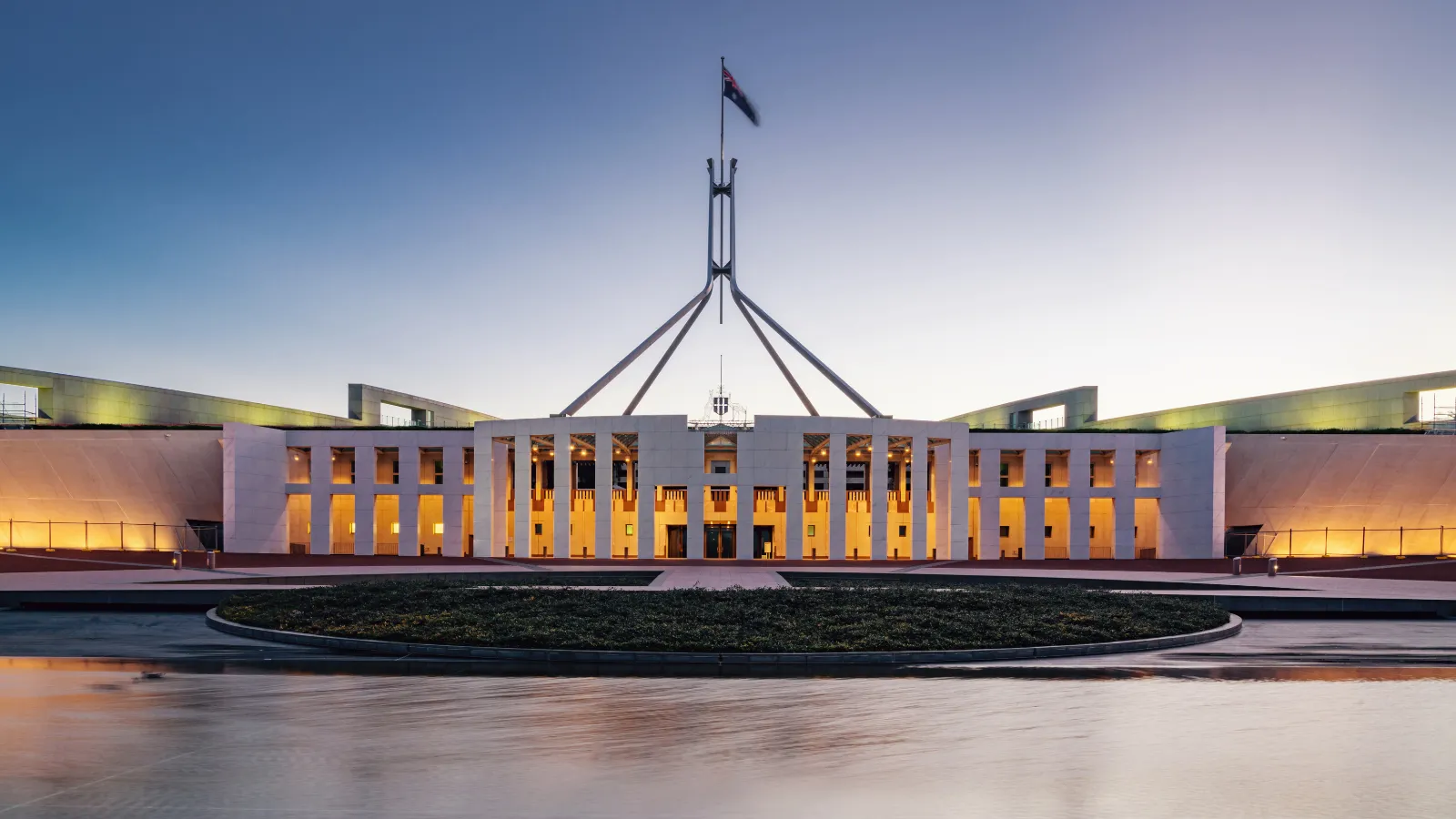
Parliament makes and changes laws. The Australian Parliament consists of the House of Representatives and the Senate.
The Executive (executive power)
The Executive puts laws into action. It includes the Prime Minister, ministers and government departments.
The Judiciary (judicial power)
Courts interpret and apply the law. Judges are independent and make decisions without political interference.
Why this system matters
The Australian system of government protects democracy, ensures accountability and safeguards individual rights. It allows citizens to choose their leaders and to change governments peacefully.
What you must know for the test
- that Australia is a constitutional monarchy
- the meaning of a federal system
- the three levels of government
- the separation of powers
- the roles of parliament, executive and courts